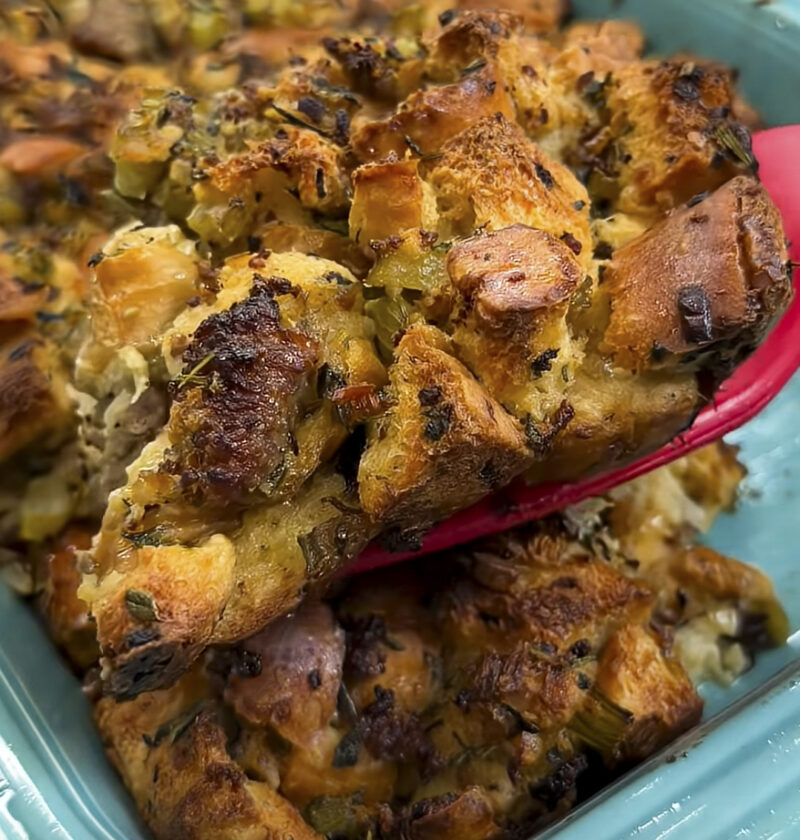
Sunlight falls on the kitchen counter, scattering over the November air, creating the illusion of a warm July afternoon. The fragrant scent of fresh sage, thyme, and sweet Italian pork fills the air while the rich aroma of sizzling stuffing wafts past your nose, transporting you to your childhood kitchen, waiting for Grandma to finish baking. Holiday stuffing has always been the highlight of our celebration feast, overshadowing the bird. Our traditional dish of the season’s bounty will delight your taste buds with tender, creamy centers and crispy golden crusts that vanish in minutes.
My first endeavor at making family holiday stuffing was a complete disaster. I had fresh white bread, just torn from the plastic package, that turned out to be too moist and created a grayish, savory paste instead of a delicious medley of herbs and spices. The critical lesson was that only stale bread can create a perfect, scrumptious stuffing that greedily absorbs hot fat from the sausages and the seasoning in the broth without becoming watery.
Key Takeaways
Savory Sausage and Herb Stuffing for Thanksgiving
Crusty French bread baked with golden pork sausage, sweet butter, and fragrant garden herbs.
Ingredients
- 6 cups dried French or sourdough bread, cut into 1/2-inch cubes
- 1/2 pound mild Italian bulk pork sausage
- 4 tablespoons unsalted butter
- 1 medium yellow onion, diced fine
- 2 stalks celery, sliced thin
- 2 cloves garlic, minced
- 1.5 tablespoons chopped fresh sage
- 1 tablespoon fresh thyme leaves
- 1.5 cups low-sodium chicken or turkey stock
- 1 large egg, lightly beaten
- 1/2 teaspoon kosher salt
- 1/4 teaspoon freshly ground black pepper
Necessary Utensils & Equipment
-
-
- 12-inch cast iron skillet or large stainless steel pan
-
- Large mixing bowl
-
- Chef knife and sturdy cutting board
-
- Wooden cooking spoon
-
- Measuring cups and spoons
-
- 8-inch square baking dish (optional if not serving straight from skillet)
-
- Aluminum foil
-
Instructions
-
- Preheat your oven to 375°F (190°C). Butter an 8-inch square baking dish or grease your oven-safe cast iron pan.
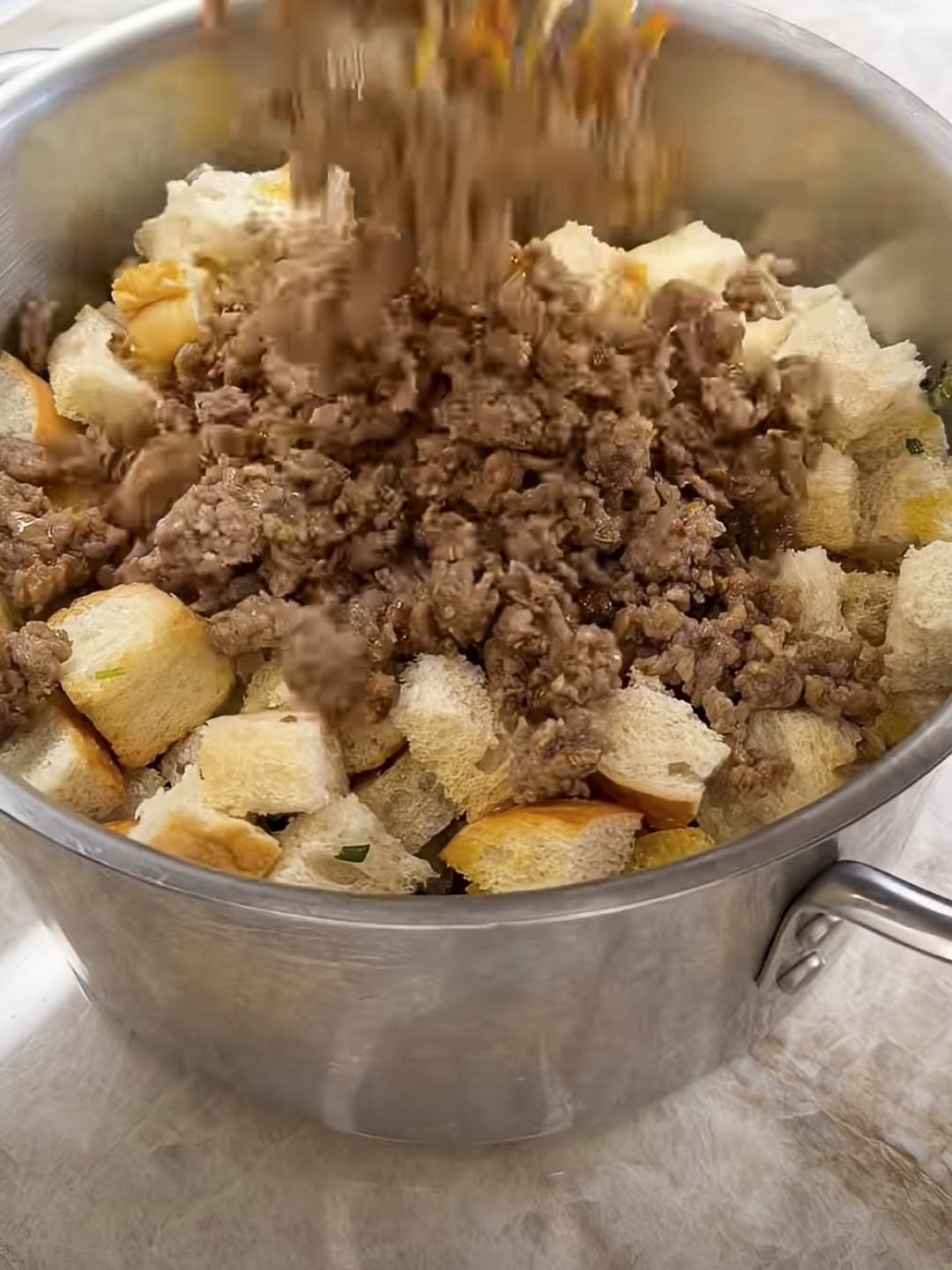
- Place your skillet over medium heat. Add the sausage and brown it thoroughly, breaking it apart with a wooden spoon for 6 to 8 minutes until crumbles turn deep golden brown. Transfer meat to your large mixing bowl, leaving drippings in the skillet.
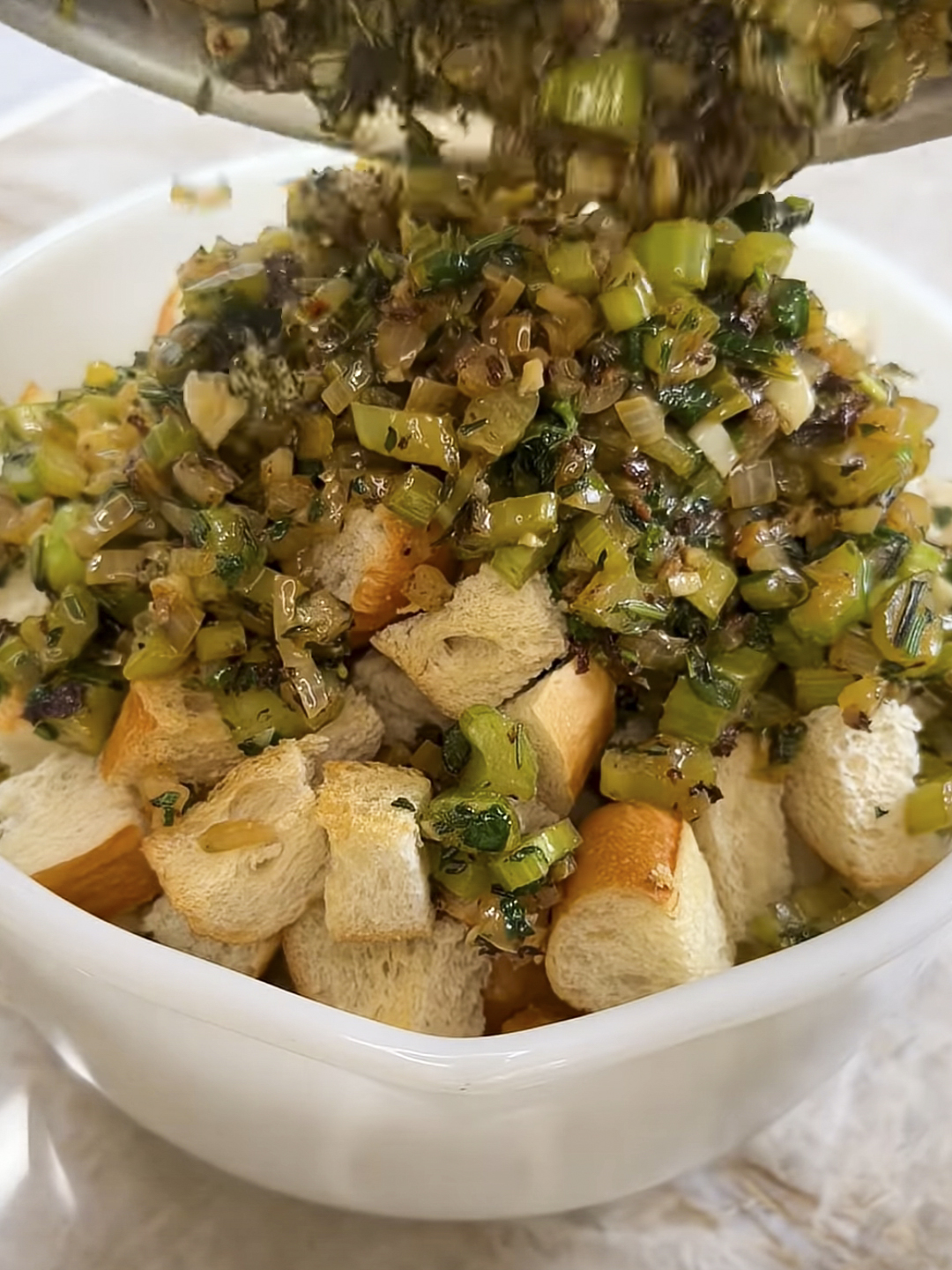
- Melt the butter directly into the remaining sausage fat. Toss in the diced onion and celery. Cook until translucent and softened, about 5 minutes. Stir in garlic, chopped sage, thyme, salt, and pepper; cook for 1 minute until fragrant.
- Tip the aromatic butter mixture over the sausage in the bowl. Dump in the dried bread cubes.
- Whisk the egg into the warm stock. Pour slowly over the bread cubes, tossing gently until the liquid absorbs evenly throughout.
- Transfer stuffing mixture back into the greased skillet or baking dish. Cover tightly with foil and bake for 15 minutes.
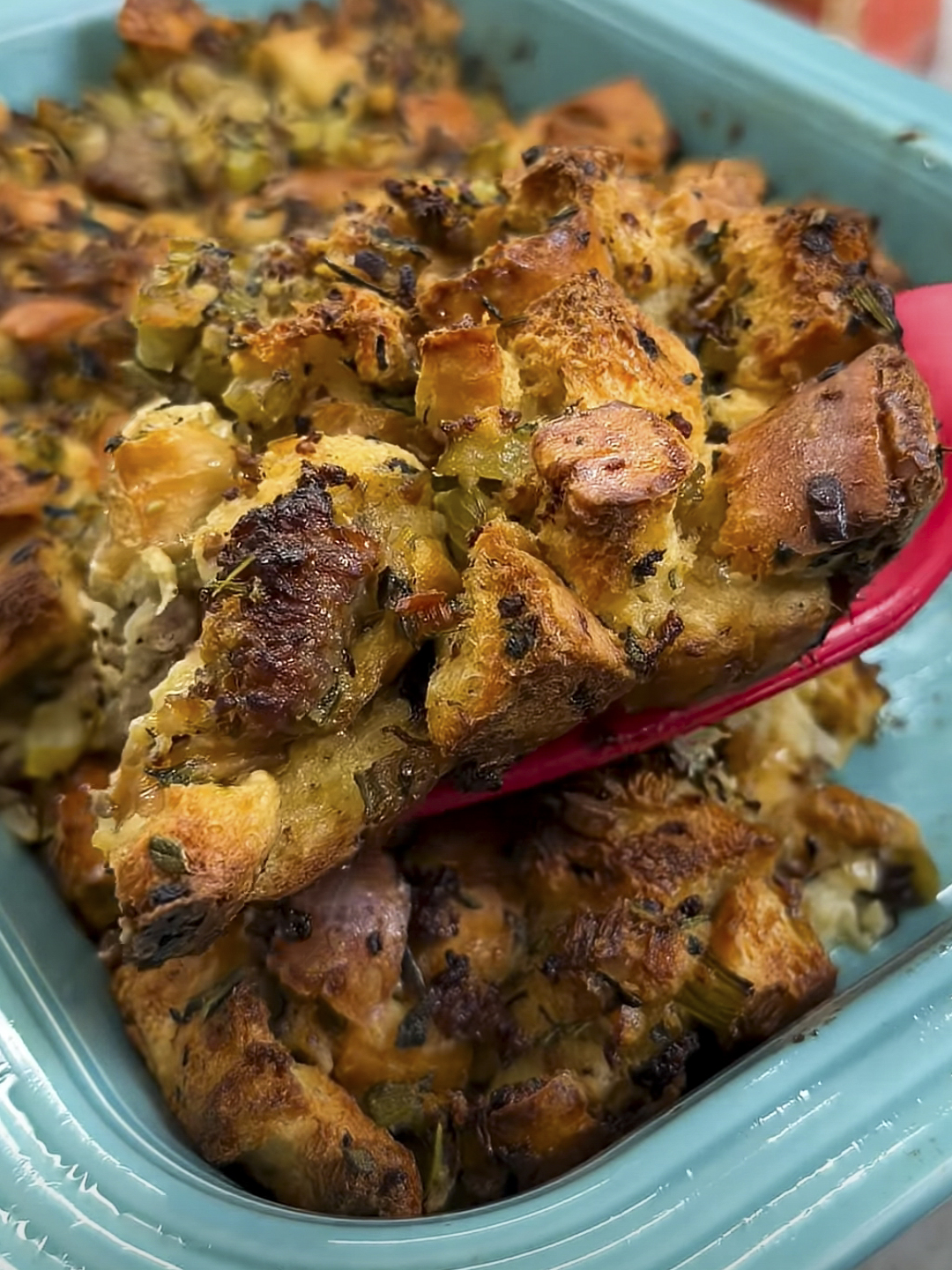
- Remove the foil and bake for an extra 15 minutes until the top reaches a crispy, deep golden crust. Cool slightly before serving warm.
Bread Selection and Drying
The preparation of any decent stuffing necessarily begins on your local bakery counter. The best option is a soft sandwich bread, which will simply fall apart in the starch soup of hot broth. You need to look for a loaf with a nice crumb structure and good crust. French boules, sourdough, and typical country loaves are all excellent choices.
Make sure to dry the bread cubes properly. Spread them out in two sheet pans and leave them in a well-ventilated place for 24 hours. Alternatively, you can put the bread in an oven at 300 degrees for 15 minutes. The result of this step should be light crunchy croutons.
Cornbread is also an option for a stuffing base, although it often tends to break into small pieces. In this case, it is worth using it in a ratio of 50:50 with dried sourdough. By the way, brioche is another great choice for preparing a fluffy and tasty stuffing. However, when using this type of bread, you need to remember that the amount of pan butter in the recipe should be decreased by a third due to the high content of fats in brioche.
Cooking Methods: Skillet vs. Baking Dish
Cooking this side dish directly in a cast iron pan produces a completely different result: the heavy iron creates a browned bottom crust that a light ceramic baking dish can’t manage. It also makes holiday preparations easy since you use one pan to brown the meat, soften the vegetables, and bake the dish.
Ceramic and glass dishes are good if you plan to transport the meal to someone else’s kitchen. They retain heat gently and look clean sitting beside gravy boats and carving boards. Butter your dish generously before filling it so that the sides slide out smoothly when serving.
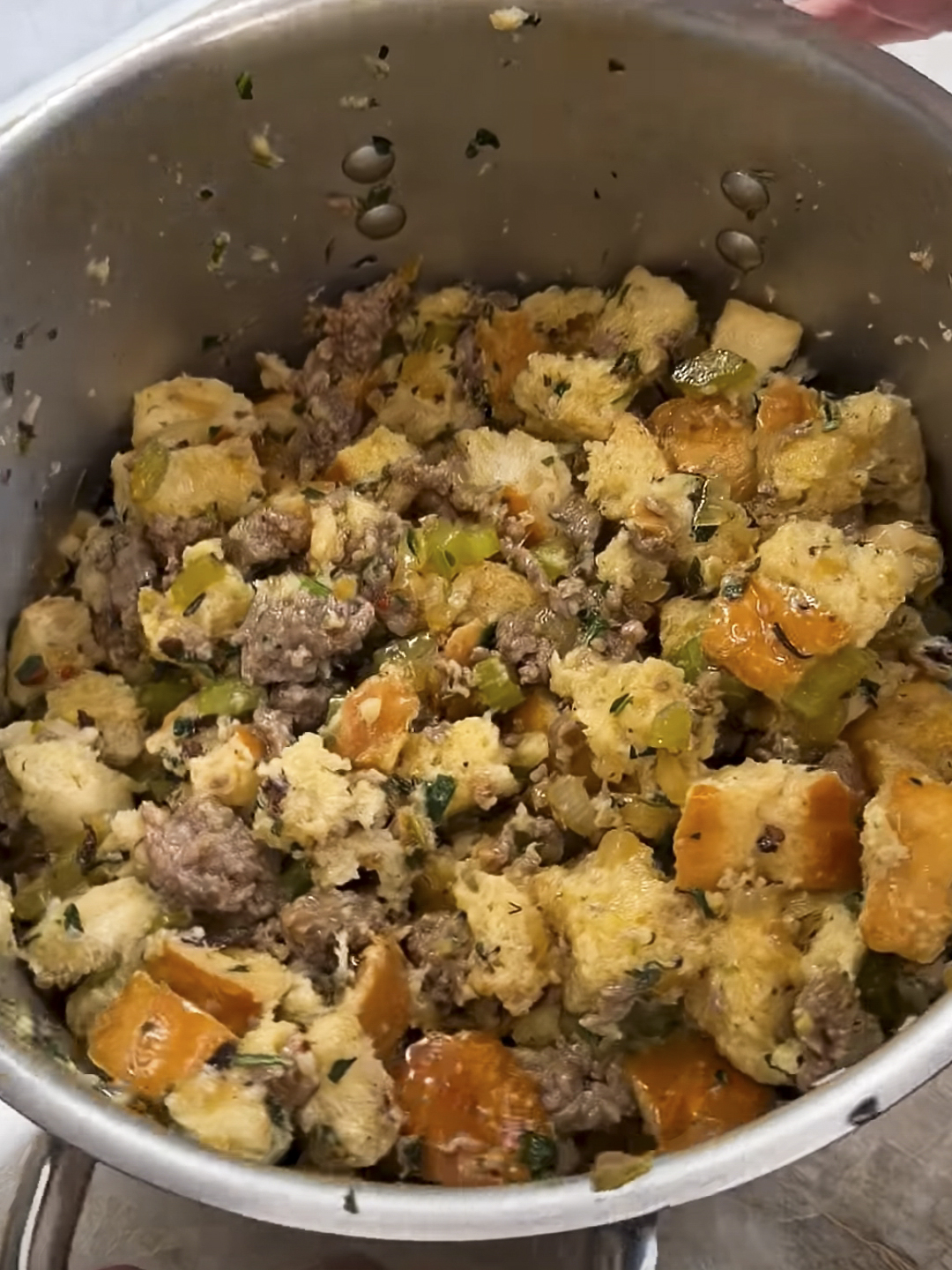
Pro Tip: Always temper your beaten egg into room-temperature broth instead of dumping it straight into hot sausage and onions. This simple step keeps your stuffing rich and moist without accidentally cooking scrambled eggs in the bowl.
Troubleshooting and Variations
Moisture balance makes or breaks a batch of stuffing. Pour your liquid in stages rather than all at once. If your bread seems thirsty after resting for two minutes, drizzle an extra splash of warm broth across the top. The cubes should feel saturated like a wrung-out sponge, never pooled with liquid.
You can adjust the flavors easily depending on what your family enjoys:
- Sweet Apple and Cranberry: Fold half a cup of diced Honeycrisp apples and dried cranberries into the onions during their final two minutes of cooking.
- Spicy Fennel Kick: Swap mild sausage for hot Italian sausage and add a quarter teaspoon of crushed fennel seeds into the butter.
- Earthy Mushroom: Sauté four ounces of sliced cremini mushrooms alongside the celery to add deeper umami notes.
If your stuffing emerges from the oven looking dry on top, melt two tablespoons of butter and brush it directly over the crust. Cover it with foil for five minutes so the steam softens the tough crumbs. Never pour cold stock over fully baked stuffing or you will wash away the seasoning.
Make-Ahead and Storage Secrets
Thanksgiving morning kitchen space is sacred. Cube bread three days ahead of time and store the pieces in an open brown paper bag on your pantry shelf. Brown sausage, onions, and herbs the afternoon before and keep them refrigerated in a sealed container.
Assemble the wet and dry ingredients just before baking. If you do this before, the bread disintegrates and becomes soggy in the pan. Pull the meat mixture out of the fridge an hour ahead of time to room-temperature before tossing it with the bread and stock.
Store leftovers in an airtight container in the fridge for up to 4 days. Reheat individual servings in an oven preheated to 350 degrees for 10 minutes, with a pat of butter on top to recreate the original crispy edges. Avoid microwaving large amounts, because it will soften the crumb and make the sausage chewy.
Frequently Asked Questions
Can I make this stuffing inside the turkey instead of a dish?
You can stuff your turkey with this recipe, but food safety standards require the very center of the stuffing to reach 165°F. Cooking the turkey long enough to hit that temperature inside the bird often dries out the breast meat. Baking your dressing in an iron skillet or casserole dish gives you far better moisture control and delicious crispy edges.
What if I don’t have fresh herbs available?
Fresh herbs deliver clean, sharp flavor, but dried herbs work in a pinch. Use one-third of the measurement listed for fresh herbs, as dried versions are much more concentrated. Substitute one-and-a-half teaspoons of dried rubbed sage and one teaspoon of dried thyme leaves directly into the melting butter.
Can I substitute turkey or chicken sausage for the pork sausage?
Turkey or chicken sausage works well if you want a lighter protein. Because poultry sausage contains far less fat than pork, melt an extra tablespoon of butter in your pan so your onions and celery have enough oil to soften without scorching.
How do I freeze leftover stuffing?
Bake the dressing completely and allow it to cool down to room temperature. Wrap it tightly in heavy plastic wrap, cover it in a layer of foil, and freeze for up to two months. Thaw overnight in the refrigerator before warming in a 350°F oven until hot throughout.
Does your family prefer a soft, custardy dressing or do you fight over the crunchy browned edges? Tell us in the comments below!