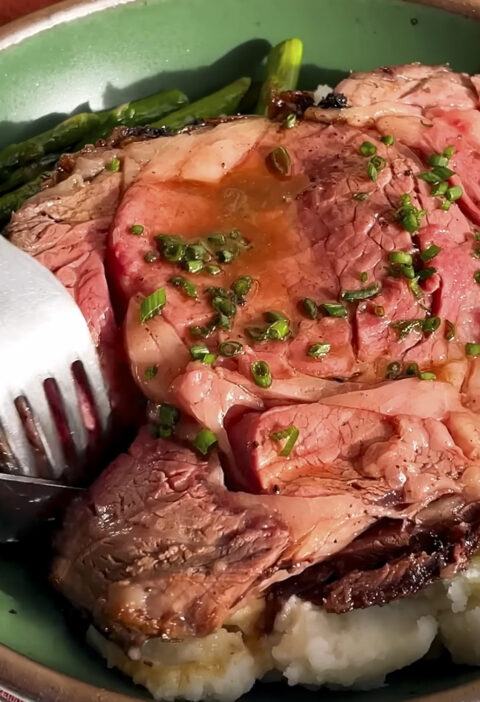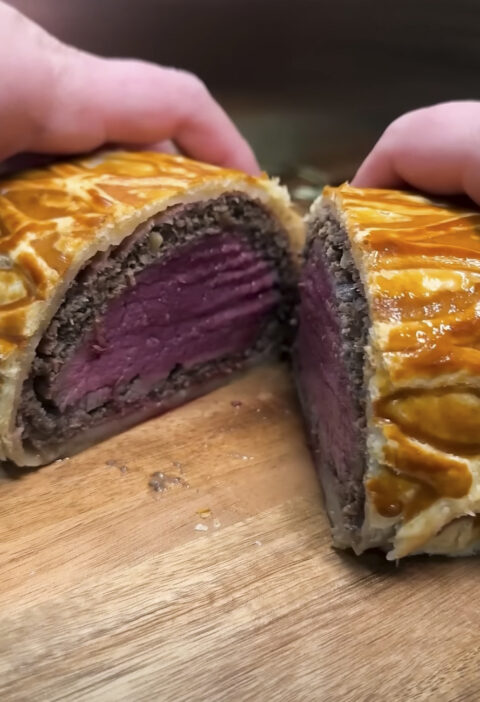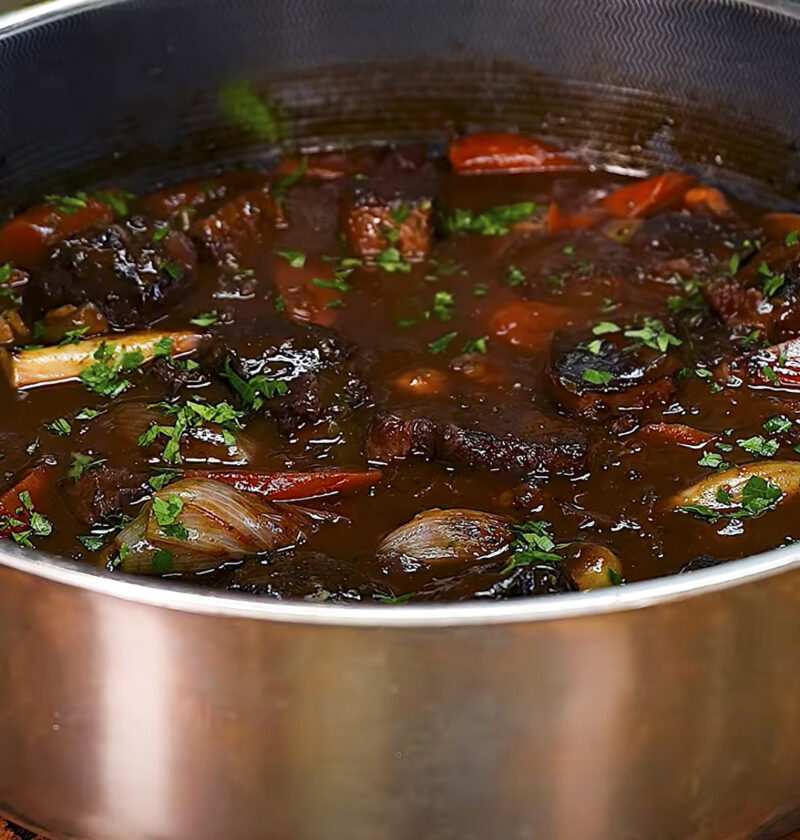
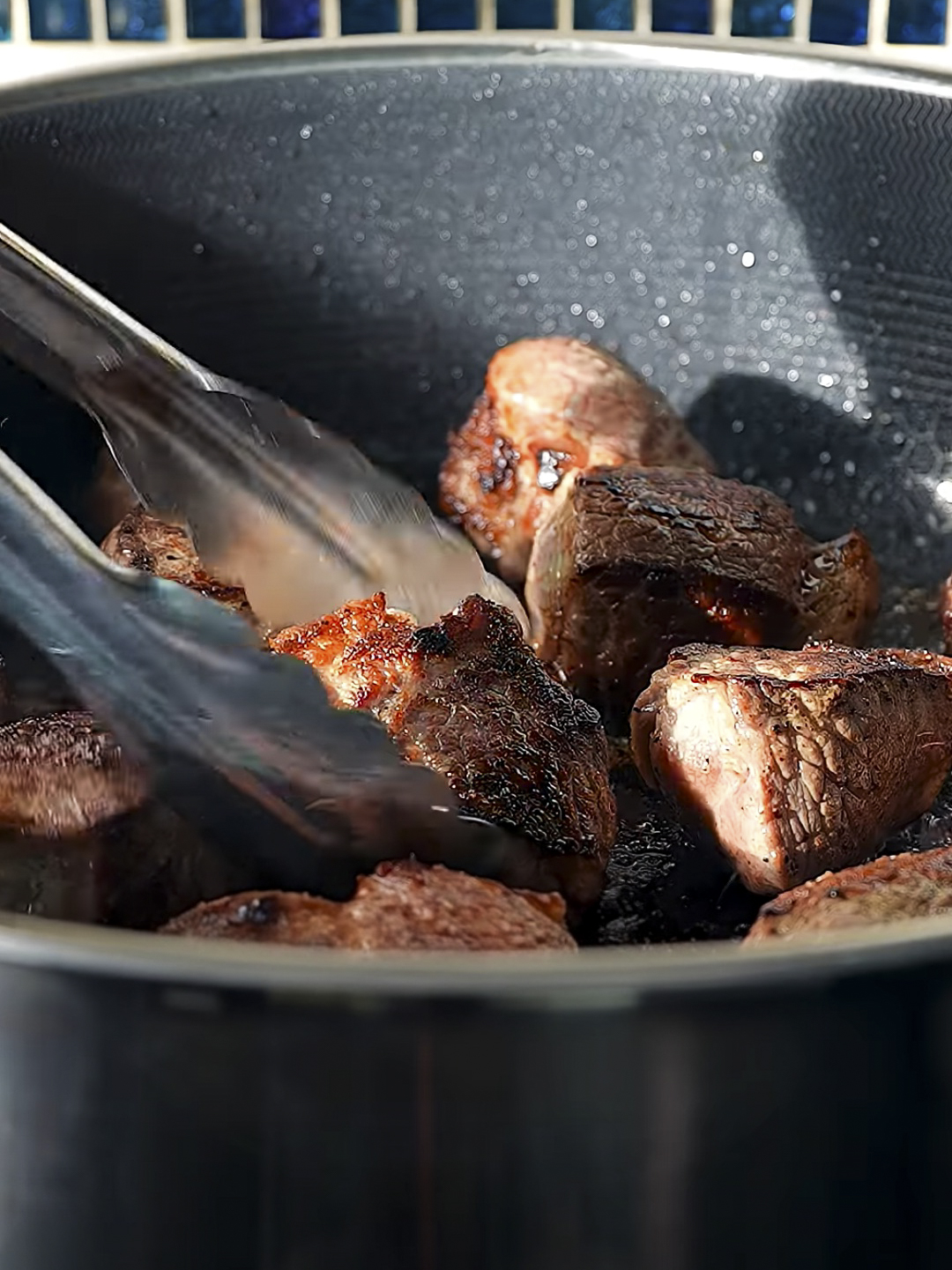
Pressing seasoned beef chuck cubes into a searing hot cast-iron skillet caramelizes the outside, sealing in juices to slow cook into tender morsels. The Maillard reaction occurring between the meat juices and the cast-iron ensures that most home cooks don’t end up with bland, watery, and purple Christmas Eve dinners.
When it comes to holiday feasts, there is nothing more sacred than the family meal on Christmas Eve. Browing beef chuck in rendered bacon fat until deep brown and caramelized ensures that there will be no bland, watery, and purple Christmas Eve dinners. Adding a splash of dry red wine into the same hot skillet deglazes every flavorful caramelized morsel that has been stirred into the pot, ensuring nothing goes to waste. The comforting flavors of an all-day French braise are achieved, but without having to hover over the stove while guests open presents.
Key Takeaways
Slow Cooker Beef Bourguignon for Christmas Eve
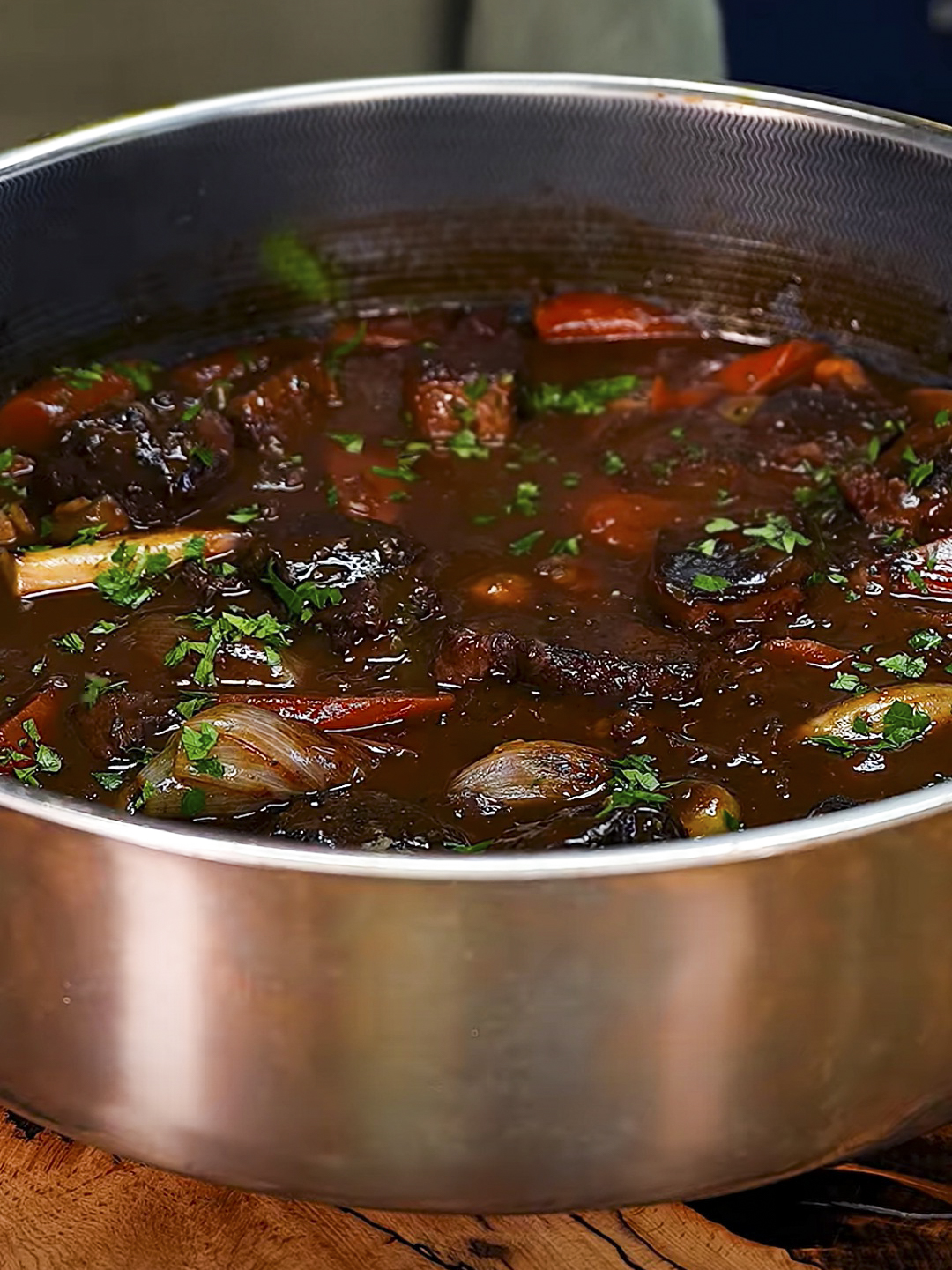
Tender beef chuck simmered in rich Pinot Noir with smoky bacon lardons, baby carrots, and butter-browned mushrooms.
Ingredients
-
-
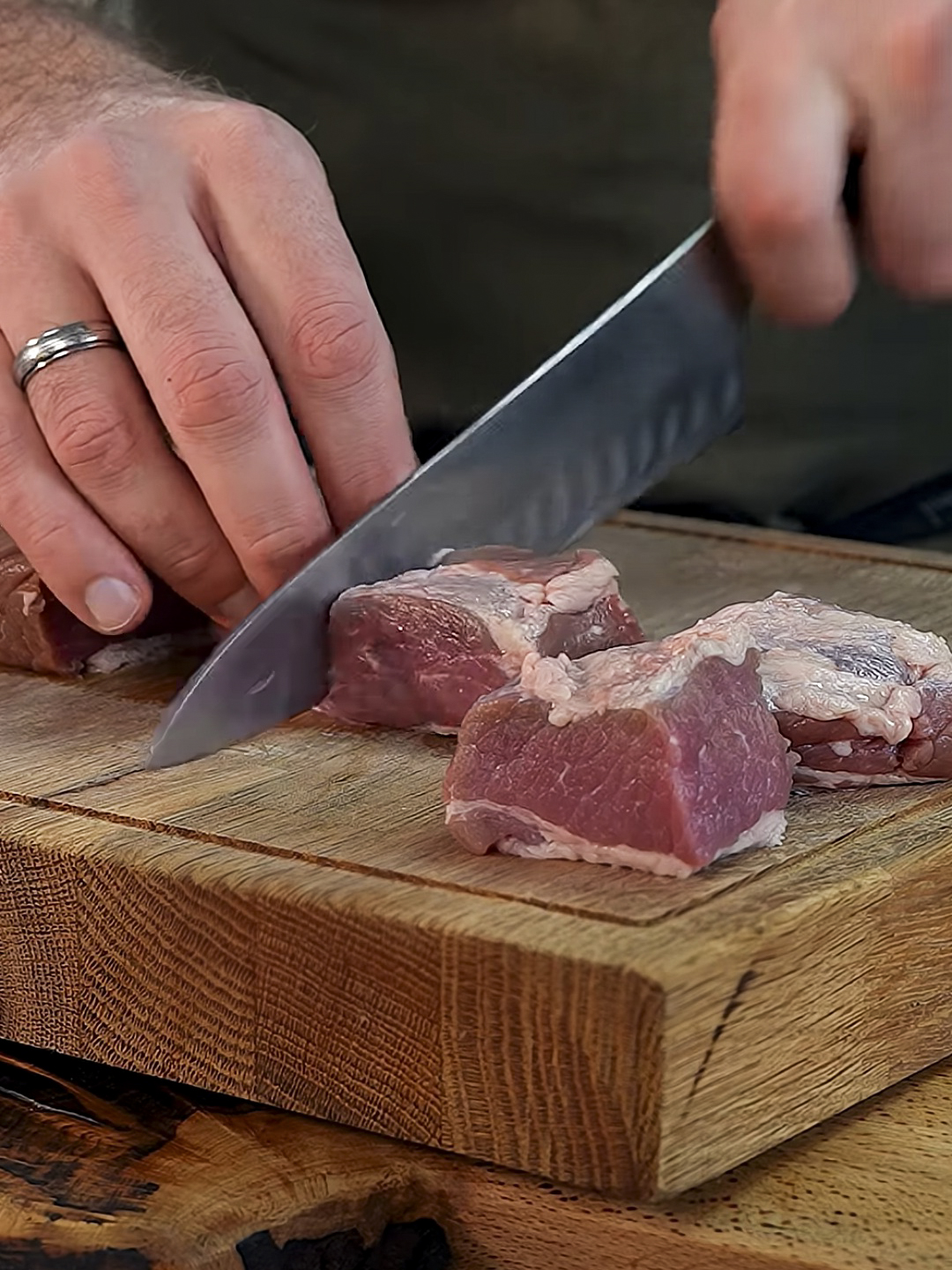
- 2 lbs boneless beef chuck roast, cut into 1.5-inch cubes
-
- 6 oz thick-cut bacon, sliced into small batons
-
- 1 medium yellow onion, finely diced
-
- 3 cloves garlic, minced
-
- 2 tbsp tomato paste
-
- 2 tbsp all-purpose flour
-
- 1.5 cups dry red wine (Pinot Noir, Merlot, or Cabernet Sauvignon)
-
- 1.5 cups low-sodium beef stock
-
- 4 medium carrots, cut into 1-inch diagonal chunks
-
- 8 oz cremini mushrooms, halved
-
- 1 tbsp unsalted butter
-
- 2 sprigs fresh thyme
-
- 1 dried bay leaf
-
- 1 tsp kosher salt, divided
-
- 0.5 tsp freshly ground black pepper
-
- 2 tbsp chopped fresh flat-leaf parsley (for garnish)
-
Necessary Utensils & Equipment
-
-
-
- 6-quart slow cooker
-
- 12-inch heavy cast-iron skillet
-
- Tongs
-
- Wooden cooking spoon
-
- Chef’s knife and cutting board
-
- Paper towels
-
- Measuring cups and spoons
-
-
Instructions
-
-
-
- Pat the beef cubes dry with paper towels; season generously with half the salt and pepper.
-
- Cook bacon pieces in a cast-iron skillet over medium heat for 6 to 8 minutes until crisp, then scoop bacon into the slow cooker, leaving rendered fat in the pan.
-
- Turn heat to high; sear beef cubes in small batches for 3 minutes per side until deeply browned, transferring each batch directly into your slow cooker.
-
- Reduce skillet heat to medium; stir in chopped onions for 3 minutes, then add minced garlic and tomato paste, stirring constantly for 1 minute until fragrant.
-
- Sprinkle flour across the onion mixture, cook for 1 minute to remove raw flour taste, then pour in 1 cup of red wine, scraping up the browned crust from the skillet bottom.
-
- Pour the deglazed wine sauce into the slow cooker along with beef stock, carrots, fresh thyme sprigs, and bay leaf.
-
- Melt butter in the empty skillet over medium-high heat, toss in halved mushrooms, and cook 4 minutes until golden; transfer them to a covered bowl in the fridge (add them during the final hour of slow cooking).
-
- Cover the slow cooker and cook on Low for 7 to 8 hours (or High for 4 to 5 hours), stirring in the browned mushrooms during the last 45 minutes of cook time.
-
- Discard bay leaf and thyme stems, taste and adjust salt, then scatter fresh parsley across the top right before serving.
-
-
How to Avoid Watery, Bland Stew
When I prepared beef bourguignon for the first time for my family, I threw raw meat, raw onions, and cheap cooking wine into my crockpot, and hurried to the store to buy gifts. When I returned home after several hours, the kitchen smelled good, but the stew was barely edible. It had a gray, watery texture, while the meat tasted boiled, not braised, and the raw alcohol taste killed any possibility of good flavor.
That mistake taught me that in slow cooker preparation, nothing evaporates, so I need to reduce the braising liquid to concentrate it before adding it to the crockpot. If one adds too much liquid to the pot, the resulting sauce will be less flavorful and less glossy than expected.
Pro Tip: Never pour cold wine directly into your slow cooker base. Always simmer wine in your hot skillet for two minutes first to burn off harsh raw alcohol tones before braising begins.
A roaring sear on dry meat makes all the difference. When water clings to meat surfaces, the beef steams rather than browns. Grab a few paper towels, press every side bone-dry, and brown only small clusters of meat at a time so the skillet temperature stays scorching hot.
Building Holiday Flavor Layers
Instructions
Classic French beef stew necessitates an hour or so of prep work. The process is straightforward if the chef understands the role of each ingredient. For instance, rendered fat from the bacon is the best frying medium that will generate pleasant woodsy notes and complement the flavor of thyme.
It is advisable to pick a red wine that is natural and not artificially sweetened. Therefore, one should choose Burgundy, Pinot Noir, Côtes du Rhône, or any other high-quality French wine. Avoid cooking wines because they are highly processed and contain salt and additives that will spoil the taste of the stew.
Tomato paste is a critical ingredient that enhances the depth of flavor in French beef stew. Its glutamates and acidity are indispensable for a savory-tasty dish. It is always advisable to cook the tomato paste until it is of a deep russet color. This step will ensure that the acquired nutty, sweet flavor is suitable to counter the metallic aftertaste of the wine.
Expert Troubleshooting and Tricks
Sometimes slow cooker stews turn out thinner than you prefer due to natural juices escaping the meat. If your sauce looks loose when the beef turns fork-tender, fix it without muddying the rich flavors.
- The Cornstarch Slurry: Whisk 1 tablespoon of cornstarch with 2 tablespoons of cold water. Stir it into the bubbling stew 20 minutes before serving.
- The Beurre Manié: Knead equal parts softened butter and flour into a smooth paste. Whisk marble-sized balls into the hot sauce to create a velvety, glossy finish.
- The Lid-Off Simmer: If your cooker runs hot, switch to High and remove the lid for the final 30 minutes to allow natural steam evaporation.
Keep your mushrooms firm and distinct rather than limp and soggy. Searing them in butter early and keeping them chilled until the final hour prevents them from shriveling into spongy, dark nubs. They stay plump and absorb just enough wine sauce.
Make-Ahead and Reheating Guide
Christmas Eve dinner should be a relaxed affair, and beef bourguignon is actually better prepared ahead of time. As the braised meat cools inside your fridge overnight, the gelatin in the sauce will firm up and the herbs will continue to flavor the mixture.
When you’re ready to serve it on Christmas Eve, scoop off any hardened fat from the top of the chilled mixture. Then, warm the mixture in your cooker’s Warm or Low setting for about two hours, or until it’s heated through. Alternatively, you could warm the mixture over medium-low heat in a large Dutch oven on your stove.
Spoon the mixture over hot Yukon Gold mashed potatoes with garlic butter, egg noodles or warm crusty sourdough to soak up the garlicky sauce.
Frequently Asked Questions
Can I make this beef bourguignon without alcohol?
You can substitute the red wine with an equal amount of rich beef bone broth mixed with two tablespoons of balsamic vinegar and one tablespoon of Worcestershire sauce. This mixture gives you the acidity and deep color of wine without any alcohol content.
What is the best cut of beef for slow cooker beef stew?
Boneless beef chuck roast is the top choice. It contains ample intramuscular fat and collagen that dissolve into soft gelatin during low, gentle braising. Leaner cuts like round roast or sirloin dry out and turn stringy under slow heat.
Why are my carrots mushy after slow cooking?
Cutting carrots into small coins causes them to break down too fast. Cut whole carrots into thick chunks, at least one to two inches in length. Thick cuts retain pleasant firmness throughout the long cooking cycle.
Can I freeze leftover beef bourguignon?
Yes, cooked beef bourguignon freezes well for up to three months. Cool completely, transfer into airtight glass containers, and leave a half-inch of headspace for liquid expansion. Thaw overnight in the refrigerator before reheating gently on the stovetop.
What sides are you planning to serve alongside your holiday beef bourguignon this year?